

Why Is There Water Inside My Headlight? (Moisture vs. Fatal Seal Failure)
Discovering water droplets, fog, or standing water inside your headlight assembly is incredibly frustrating. Left unaddressed, moisture does more than ruin your vehicle's look—it corrodes electrical sockets, blows expensive halogen bulbs, and permanently shorts out modern LED ballast control modules. 🛠️
But before you spend hundreds of dollars on a replacement, you need to determine if you are dealing with normal condensation or a fatal seal failure. 🔍
Here is how to diagnose the issue like a professional technician.

Anatomy of a modern headlight housing, highlighting the outer clear lens and internal reflective chrome components.
💡 Step 1: Is It Condensation or True Water Ingress?
Modern automotive headlights are not completely airtight. They are built with small, integrated vents on the back of the housing. These vents allow the intense heat generated by high-power bulbs to escape, preventing the plastic housing from warping or melting.
Because they are vented, atmospheric moisture naturally creeps inside when the car cools down.
The Diagnostic Test:
- Normal Condensation: Looks like a fine, thin mist or light fog across the inside face of the lens (similar to a bathroom mirror after a shower). It typically appears after a sudden temperature drop or a car wash. If you turn your headlights on for 20 to 30 minutes, the heat from the bulbs should completely dry the mist out.
- Fatal Seal Failure: This is characterized by large, distinct water droplets running down the inside of the plastic, heavy pooling water at the very bottom of the assembly casing, or fog that remains trapped for days regardless of weather or headlight use. 🛑
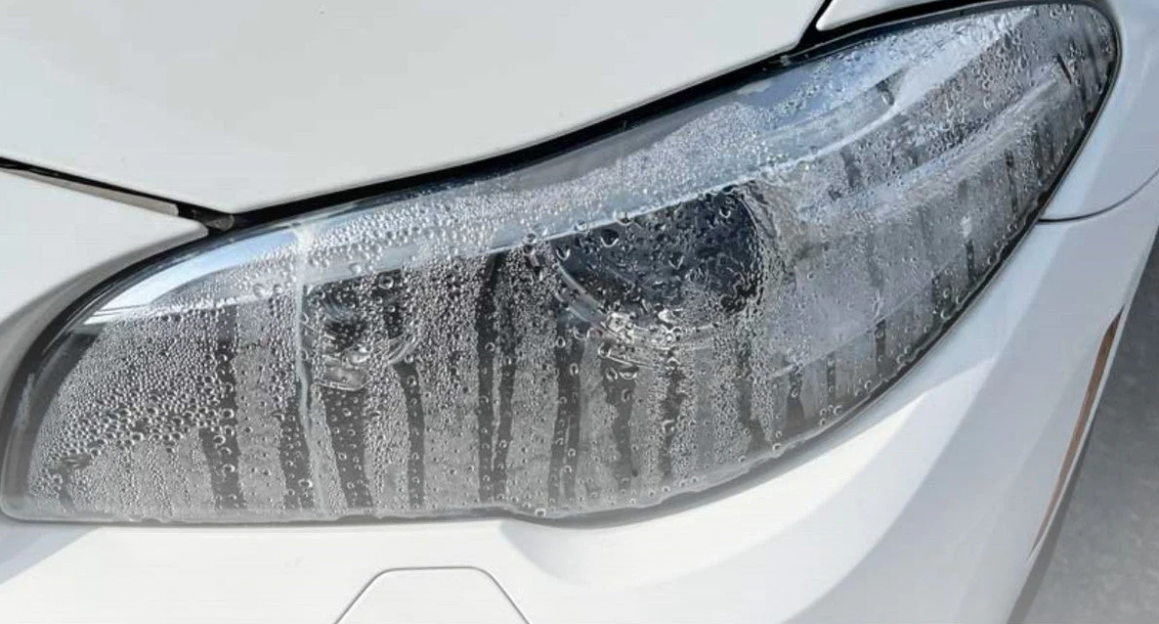
Example of a severe, non-normal factory seal failure trapping water droplets inside the housing.
🚗 The 3 Main Causes of Headlight Leaks
If your headlight failed the condensation test and is actively trapping water, one of three components has failed:
1. The Perimeter Factory Butyl Seal Has Rotted
The transparent front lens is glued to the black rear housing using a heavy-duty automotive adhesive (usually butyl rubber). Over years of vibration, road salt, and UV exposure, this adhesive dries out, shrinks, and forms microscopic cracks that draw water straight into the assembly.
2. A Cracked Housing from Road Debris
Even if the front of your headlight looks pristine, hitting a deep pothole or snapping a mounting tab in a minor fender-bender can cause a hidden, hairline fracture in the rear plastic housing. Water kicked up by your tires splashes directly through these rear cracks.
3. Missing or Defective Bulb Gaskets
Every bulb or wiring harness plug that twists into the back of your headlight relies on a small rubber O-ring or rubber dust boot to seal the opening. If a bulb was replaced recently and the gasket twisted, slipped, or wasn't seated perfectly, water will run down the back of the engine bay straight into the bulb socket.
⚠️ Why DIY "Fixes" Usually Fail
If you search the internet, you will find countless tutorials suggesting you drill small drain holes in the bottom of your headlight plastic or seal the perimeter with silicone caulk from a home improvement store.
Why you shouldn't do this:
- Drilling Holes: Drilling holes introduces road dust, dirt, and bugs directly into the housing. Within a few months, your headlight will look muddy and filthy on the inside, permanently ruining the reflective chrome surfaces.
- External Silicone: Smearing external silicone caulk over a failed factory seal rarely works because water is already trapped inside the chemistry of the old adhesive. Furthermore, household silicone cannot withstand the extreme heat cycles of an engine bay, causing it to peel away within a single season.
- The Oven Method: To properly re-seal a headlight, you have to bake the assembly in an industrial oven to melt the old adhesive, separate the lens, clean the channel, apply brand new butyl tape, and clamp it back together. For most DIYers, this leads to warped plastic, melted components, and a completely ruined assembly.
🎯 The Cost-Effective, Permanent Solution
Once a headlight's factory seal is structurally compromised, the most reliable and cost-effective fix is to replace the housing assembly entirely.
You don’t have to pay premium dealership prices for brand-new factory parts. At jcrozbdeals LLC, we source premium, fully inspected open-box shelf pulls, liquidated inventory, and genuine OEM replacement headlight assemblies. Every housing that enters our warehouse is meticulously checked for intact mounting tabs, pristine factory perimeter seals, and secure rear dust boots so you can drop it straight into your vehicle and get back on the road safely. 🚙
Need a replacement? Check our live, real-time inventory of fully inspected Automotive Component Pulls & Headlight Assemblies right now to find an exact match for your vehicle at a fraction of retail cost.